Thursday, March 4

Read Before Eating

Perhaps, if Alice had had the help of a kind regulatory agency when she was in Wonderland, she would have known the recommended serving and effects of the "Drink Me" elixir. Without the Wonderland FDA's help, however, poor Alice is left to experimentation and its dramatic results.

Does healthy eating begin with active label reading? The FDA thinks so. After all, we can't have foolish customers picking up an ice cream dessert at their local grocery store all the time believing that ice cream is low in fat and therefore good for them. On the other hand, our government wouldn't want us believing a healthy product (like POM Wonderful, as the WSJ report notes) is too good to be true.

Since I was eating my microwaveable lunch while reading the FDA's latest concerns, I turned to the label on my soup. This particular soup is one that claims to be a healthier option, so its packaging was happy to share its many benefits. I found ample explanation of the vegetable content in my soup. Lest I be deceived into thinking that 3/4 of a cup of vegetables is all that I'll need for the day (although it's likely all I'll consume today), I am reminded by the soup company that my lunch only has 30% of the FDA's recommended serving of vegetables (which by the way, no need to do the math since the soup company already did, is 2 and 1/2 cups). The fat content of this veggie-rich lunch? One and a half grams per serving. But wait. This little cup of soup has not one but "about" two servings, so if I indulge and consume all 14 ounces, then I'll be taking in a grand total of about 3 grams (that math I did without the healthy soup company's help).

Of course. this is not my first time reading a food label. I am an avid reader of the labels on my food, partly out of food consciousness and partly out of curiosity. I appreciate the basic nutritional information provided which helps me avoid excessive amounts of fat, sodium, sugar, etc. Additional asterisks and tiny exception clauses placed on packaging to placate the FDA, however, have yet to change my eating or reading habits. Despite clear nutritional labels, there must be a point of consumer commonsense and awareness. Otherwise, consume at your own risk.

Tuesday, February 23

Now That's Classy

Hosting a classy dinner and ashamed to bring out the Tabasco because it lacks elegance? Well, your problems are now solved thanks to the "gift of the day" at the Law Gallery: a hand crafted Tabasco holder. Here at TBATC we're waiting until they start selling the complete Classy Condiment set before we invest our hard-earned cash on this work of art. We also might be persuaded if there were optional engravings of pastoral scenes.

Wednesday, February 10

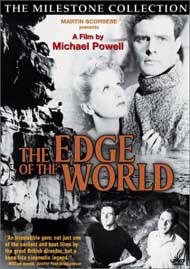
A Movie in the Corner: 'The Edge of the World'

Slowly, I've been making my way through the films of Michael Powell & Emeric Pressburger, aka The Archers. They are probably most famous for The Red Shoes (1948), which I watched years ago without knowing who the Archers were and sought out simply because I'd seen this beautiful clip, at 00:19, of a Moira Shearer's feet racing down blue spiral stairs. (P.S. New Yorkers, make sure to catch a screening of The Red Shoes at Film Forum starting February 19!)

I'd recommend several of their others—especially A Matter of Life and Death (AMOLAD), The Life and Death of Colonel Blimp, A Canterbury Tale, and the fantastically titled I Know Where I'm Going! (IKWIG), but tonight I watched Powell's first major film, made before he paired up with Pressburger: The Edge of the World (1937). This one features hands-down the best sheep ever on film. Sheep running, sheep being shorn, a lost sheep being hoisted up a Scottish cliff away from the breakers—and even sheeps' wool being knitted into bonny sweaters. There are lambs, too. Of course.

But the movie, in truth, isn't about sheep. If you don't take my word for, watch this TCM clip of Thelma Schoonmaker talking about her late husband Michael Powell's movie, from its genesis in a news item to its filming on the remote island of Foula.

There's also a great joke about long sermons (i.e. those exceeding an hour) and another about John Knox (which is not said tongue-in-cheek!). Also, it's kind of terrific to see leading lady Ruth look down a crag to the distant water below, pine for her departed lover, and wish to jump—much like, to my surprise, Bella Swan in New Moon, except Ruth is in black and white, composed, and her emotions are expressed in far simpler, but stranger and more memorable and more natural, special effects. And, there are no glittering, wan-faced vampires!

Tuesday, February 9

Franz Kafka, Occasional Belletrist

Quick, now. I say Franz Kafka, and the first thing you think of is probably ... a cockroach—and one with a funny name like Gregor. But for a little while perish the thought of creepy, if sensitive, crawlers and consider this: that, as today's Writer's Almanac points out in its first installment of love letters to welcome Valentine's Day, Kafka "wrote a great many love letters—many of the anguished, helpless variety—to a Berlin woman [Felice Bauer] to whom he was engaged for five years. Their relationship was carried out almost entirely by letters." (He was engaged to Ms. Bauer twice, and separated from her twice.)

A few of the rosier stretches in his missives are featured in the WA link above. But there are also more familiar Kafka-esque stretches to recall, such as this:
The life that awaits you is not that of the happy couples you see strolling along before you in Westerland ... no lighthearted chatter arm in arm, but a monastic life at the side of a man who is peevish, miserable, silent, discontented, and sickly; a man who, and this will seem to you akin to madness, is chained to invisible literature by invisible chains and screams when approached because, so he claims, someone is touching those chains.
In his mind, too, Felice has become wrapped up in his writing:
Lately I have found to my amazement how intimately you have now become associated with my writing, although until recently I believe that the only time I did not think about you at all was while I was writing.
At the same time Felice was to him the suggestion of a life he might lead beyond work, of a life inching toward something like normalcy—"happy couples" and "their light-hearted chatter" and so on. But as a NYT review of a 1988 reissue of Kafka's love letters, which you can purchase here, remarked,
[Kafka] returned to the solitude he felt so necessary for his work. He apparently believed Yeats's dictum that ''the intellect of man is forced to choose/ Perfection of the life, or of the work'' and in the end, he embraced the latter.

While we are on the subject of letters, make sure to buy a copy of Yours Ever: People and Their Letters, the latest scrumptious book from the pen of journo-turned-novelist Thomas Mallon.

Tuesday, February 2

Happy Birthday, Dubliner: James Joyce (and 'Ulysses') are another year older

Yes, that is Marilyn Monroe reading Ulysses. And no, she is not going to sing "Happy Birthday, Mr. Novelist" in a smoky voice on that playground. She's going to sit there and read her meandering book quietly, and we are going to pause to admire her book playing the part of "edifying accessory." The type on that tome—blue and red—nicely complements her tank top of brightly colored stripes. Formidable, Ms. Monroe.

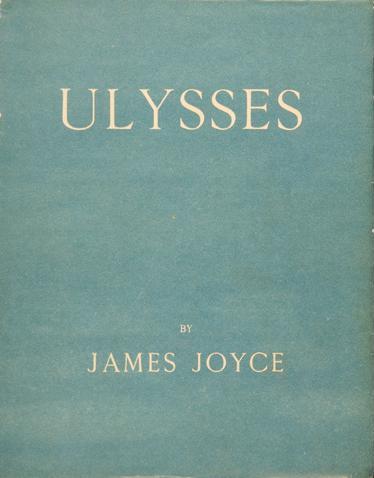
But enough of celebrities reading. On to Joyce. On this day in 1922, at age 40—he considered his birthday a lucky day—Joyce published Ulysses, which he pronounced "Oolissays." (He also considered blue and white to be most auspicious hues. Furthermore, they're in line with the Greek theme he started in naming his book after Homer's wily and sea-buffeted king, whom he first encountered as a schoolboy by way of Charles Lamb's adaptation of the Odyssey.)

At the Barnes & Noble website—home to sound book reviews, short and long, and its Daybook—I learned the genesis of the repeated, breathless use of that already breathy word "yes" in the "famous 45-page, 8-sentence Molly Bloom monologue" that ends Ulysses. Apparently, Joyce had simply heard a friend, an American named Lillian Wallace, saying "yes" repeatedly in conversation. Seven months later, when Ulysses was published, she was in attendance at a special dinner Joyce held to celebrate the birth of his book into print. (And at this dinner he unveiled a copy of Ulysses, with blue covers and white type, a rare copy, as the first run of the novel was quite small.)

Should you crave to read a tad more about Joyce and his quirks, which were legion, even by writers' standards, check out today's Writer's Almanac. A sample here:
Joyce was afraid of thunder and lightning—during electrical storms, he would hide under bedcovers—and he was also afraid of dogs, and walked around town with rocks in his pockets in case he encountered any roaming mutts. He didn't care for the arts other than music and literature, and he especially had no patience for art like painting. Over his desk he kept a photograph of a statue of Penelope (from Greek mythology, the wife of Odysseus/Ulysses) and a photograph of a man from Trieste, whom Joyce wouldn't name but said was the model for Leopold Bloom. On his desk he had a tiny bronze statue of a woman lying back in a chair with a cat draped over her shoulders. All of his friends told him it was ugly, but he kept it on his desk anyway. One of his Parisian friends remarked, "He had not taste, only genius."
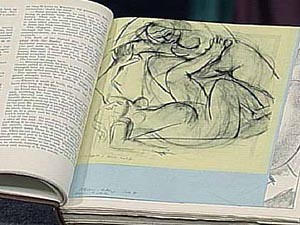
Although Joyce might have had scant appreciation for the visual arts, Henri Matisse later illustrated Ulysses with 26 images, which don't illustrate the book proper, but rather key moments from the Odyssey that have been abstracted into faceless, struggling forms. The titles of the six etchings, for instance, include "Calypso," "Cyclops," "Nausicaa," "Circe," and "Ithaca." For starters, here's his take of drunken Polyphemos losing his eye.

Tuesday, January 26

SarcMark, Take 2

Now that we are able to access the SarcMark homepage, oh what joys there are to be found...

A Well-Marked Wit


Wit has truth in it; wisecracking is simply calisthenics with words.
--Dorothy Parker

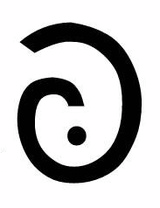
A new punctuation mark is being offered to the world. While I am a firm believer in the purpose and power of punctuation, I greet this news with a shrug. The SarcMark, which was "temporarily" unavailable at the time of this post, seeks to save the world from misunderstanding, much like applause and laugh signs saved the live sitcom and game show from silence.

The SarcMark, which closely resembles a curly fry, is intended to be used at the end of a sarcastic statement in text, IM, email, etc. Thus, you can let your reader know that you were not, of course, being serious but snarky. Now if your reader never appreciates sarcasm even when there is a large signal to commemorate its passing, then you are without luck.

In my non-sarcastic opinion, ironic wit is weakened when you add an elaborate punctuation mark: like a punctuated wink. There is a satisfaction in a successfully conveyed witty remark, and conceding your joke by giving your audience the nudge to "get it" lessens the triumph of irony. Granted having your sarcastic comment met with confusion-induced silence can be socially awkward, yet even in those awkward scenes there is a humor that can be appreciated.

If, however, your sarcasm places you in more socially awkward situations than your sense of humor can tolerate, or if fear of causing offense has kept you from exercising verbal "calisthenics," then the SarcMark should be a welcome sign to you. For the low low price of $1.99, you too can be as ironic as you desire without the worry of confusing or offending your less sarcastically-inclined friends. If only they'd throw in a comma and bonus exclamation point, I might just be sold.